The global electric vehicle (EV) market is entering a new phase in 2026. With stronger battery technology, expanding charging networks, and intense competition among automakers, EV adoption is accelerating worldwide. But what’s really shaping this transformation?
📌Global EV Market Growth
The global electric vehicle (EV) market continues to expand at an unprecedented pace in 2026. Governments, automakers, and consumers are aligning around electrification due to stricter climate policies, technological improvements, and falling battery costs.
- China remains the largest EV market China continues to dominate the global EV landscape, accounting for the largest share of worldwide electric vehicle sales.
- Europe pushing aggressive emission targets Europe is accelerating its transition to electric mobility through some of the world’s strictest emission regulations.
- US focusing on incentives and domestic production United States is strengthening its EV ecosystem through federal incentives and large-scale domestic manufacturing investments.
🔋 Battery Technology Advancements
Battery technology is the heart of the electric vehicle revolution. While design, software, and charging networks play important roles, it is battery innovation that ultimately determines how far an EV can travel, how quickly it can recharge, how long it lasts, and how affordable it becomes.
- Solid-state battery development Solid-state batteries are widely considered the “next big breakthrough” in electric mobility. Unlike conventional lithium-ion batteries that use a liquid electrolyte, solid-state batteries use a solid electrolyte.
- Faster charging speeds One of the biggest barriers to EV adoption has been charging time. However, rapid advancements in charging technology and battery management systems are closing the gap between refueling a gasoline car and charging an electric one.
- Improved range (500–800 km average in premium EVs)Range anxiety — the fear of running out of charge — has long been a psychological barrier for potential EV buyers. However, improvements in battery capacity, vehicle efficiency, and energy management systems are dramatically extending driving range.
⚡ Charging Infrastructure Expansion
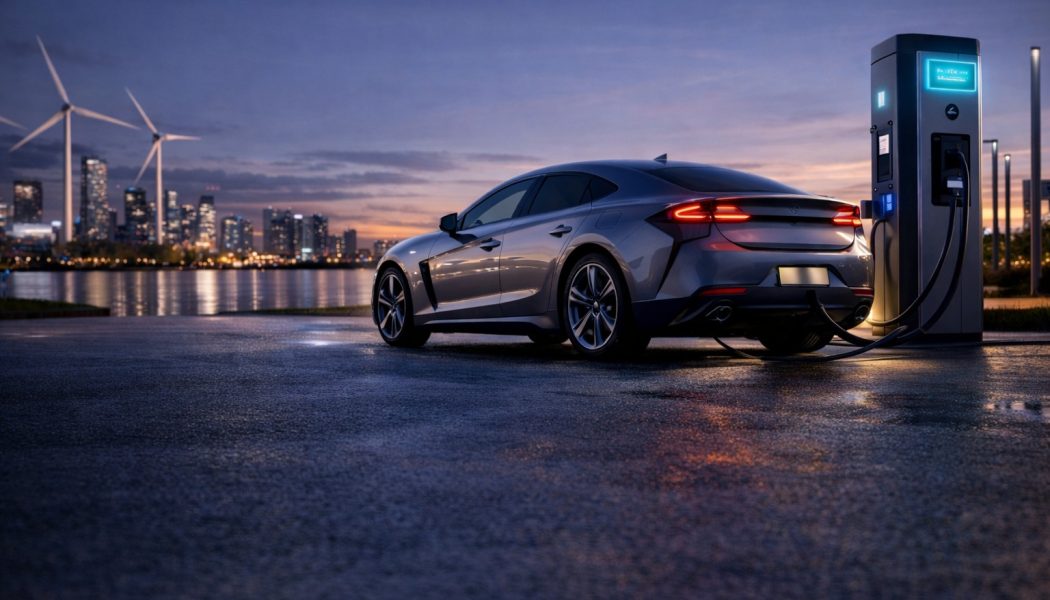
- Ultra-fast DC chargers Ultra-fast DC charging is transforming long-distance EV travel. Traditional AC chargers are ideal for overnight charging, but DC fast chargers are designed for speed — delivering high power directly to the battery.
- Growth in home charging solutions Despite the expansion of public charging, most EV owners still prefer charging at home. Home charging remains the most convenient and cost-effective way to power an electric vehicle.
- Wireless charging pilots Wireless charging represents one of the most futuristic developments in electric mobility. Though still in early deployment stages, pilot programs are gaining momentum in several countries.
⚠️ Challenges Ahead
- Raw material shortages Electric vehicles depend heavily on critical minerals such as lithium, cobalt, nickel, graphite, and rare earth elements. These materials are essential for battery production, electric motors, and power electronics.
- Charging infrastructure gaps While charging networks are expanding rapidly, infrastructure growth is not uniform across regions.
- Price competition As EV adoption accelerates, competition among automakers has intensified — leading to aggressive pricing strategies.
🏁 Conclusion
2026 could be the turning point where EVs move from early adoption to mainstream dominance.